Speech AI for Zimbabwean languages · Independent builder
Inzwi
Speech AI for Zimbabwean Languages
Speech recognition and synthesis for Shona and Ndebele, built in Zimbabwe on a consented, dialect-tagged corpus recorded by Zimbabwean speakers. Data Champion at the POTRAZ AI4I Challenge 2026.
- Stack
- TypeScriptNext.jsNode.jsPostgreSQLPyTorchAzure
- Links
- Visit SiteContribute
The live product · inzwi.app
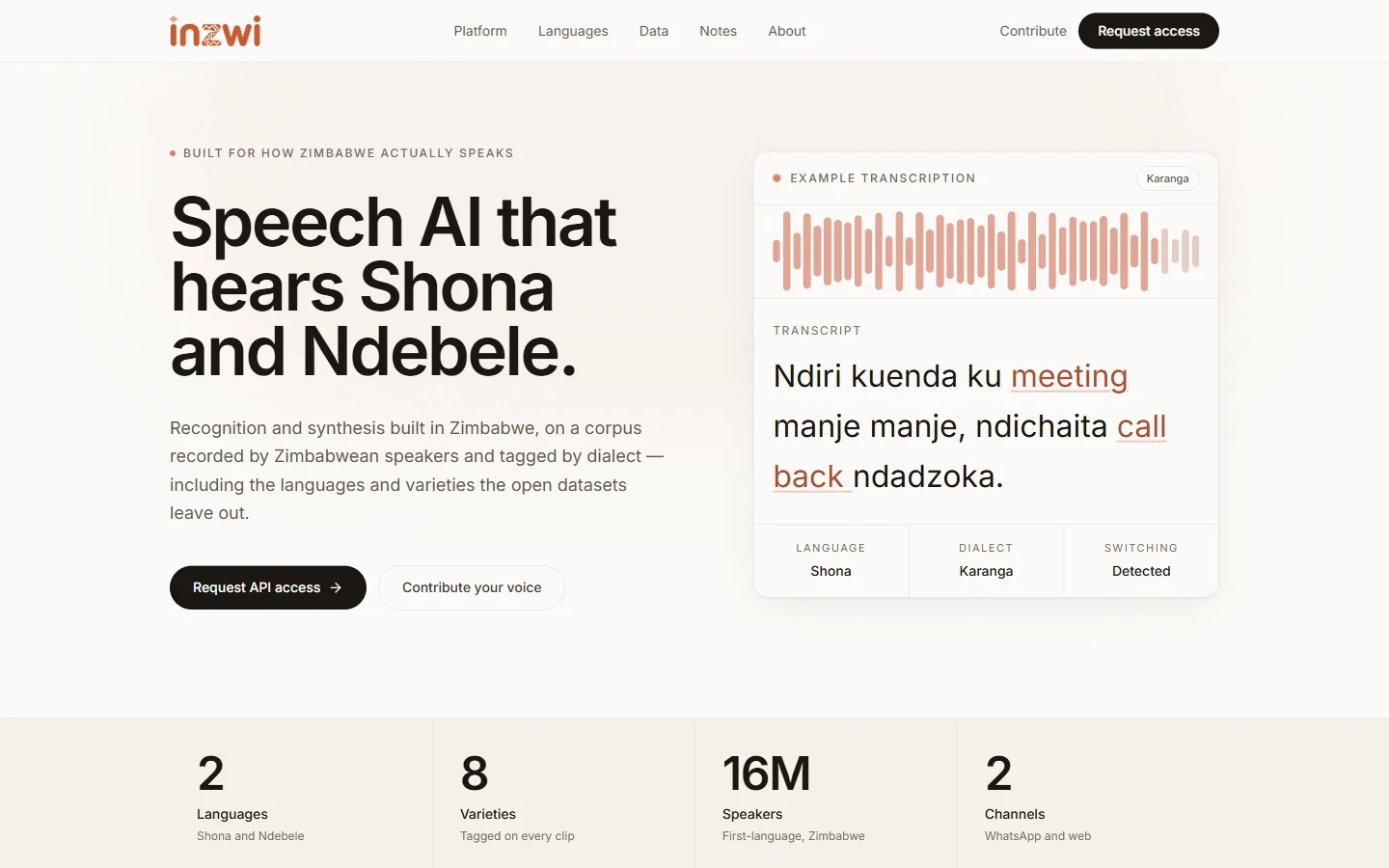
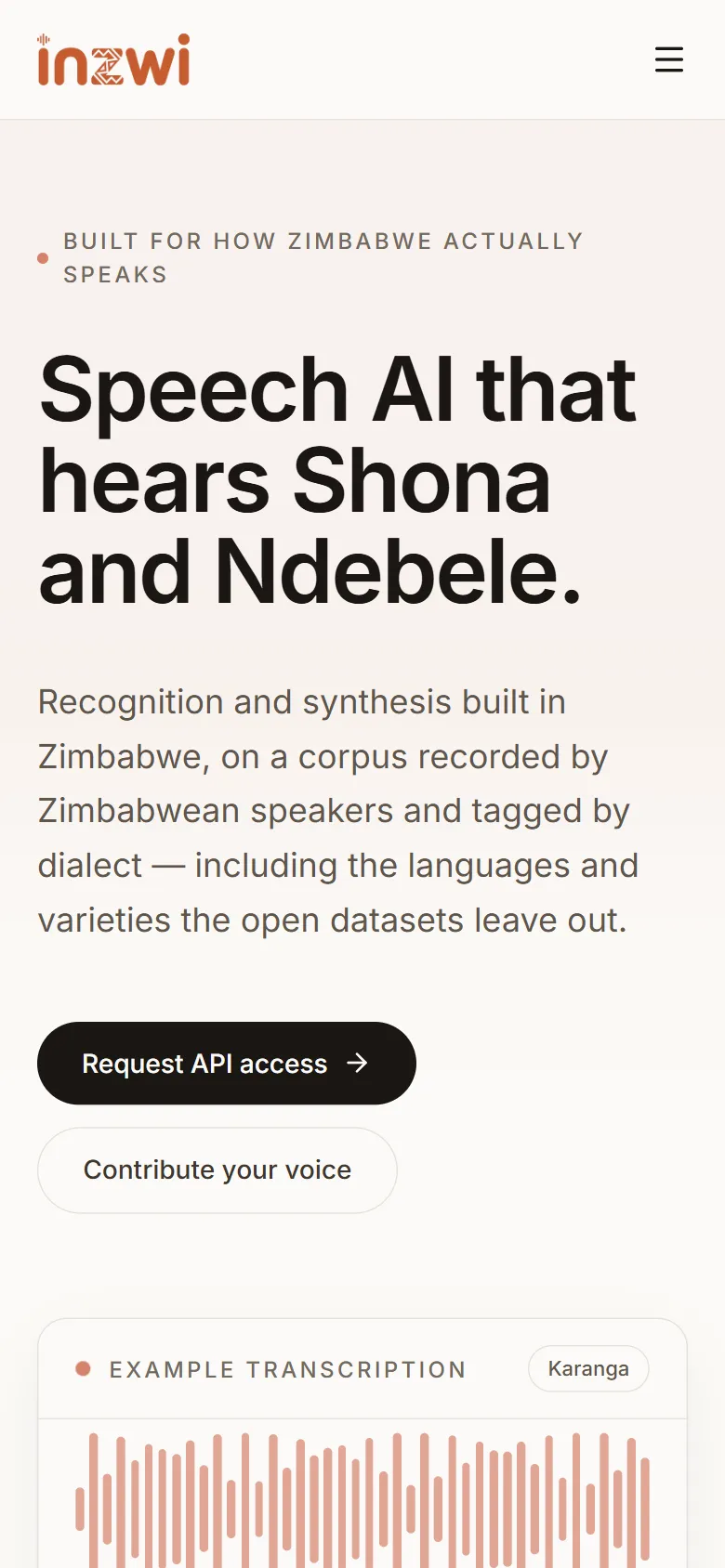
Speech AI for Zimbabwean languages: recognition and synthesis built in Zimbabwe, on a corpus recorded by Zimbabwean speakers and tagged by dialect.
01The Problem
Shona and Ndebele are first languages for around 16 million people in Zimbabwe, yet they have almost no representation in modern language technology. The reason is simple: there is no training data. No meaningful speech corpora, no parallel text, and the open datasets that do exist leave out most of the varieties people actually speak. Without data there are no models, and without models an entire way of speaking has no voice in the digital world.
And people don't speak in textbook sentences. A single line can move between Shona and English mid-thought: "Ndiri kuenda ku meeting manje manje, ndichaita call back ndadzoka." A system that can't follow that isn't built for how Zimbabwe actually speaks.
02What Inzwi Is Now
Inzwi (meaning "voice" in Shona) started as a crowdsourcing platform for English–Shona data, my final-year research project at MSU. It has grown into a speech platform with three parts:
- Recognition - Transcribes speech, identifies the dialect, and handles English code-switching naturally.
- Synthesis - Expressive, studio-captured voices in Shona and Ndebele.
- Understanding - Interprets conversations in-language, rather than translating through English first.
It reaches people on WhatsApp and the web, and the API is in private beta for developers building on Zimbabwean languages.
03Languages and Varieties
- Shona, with its dialects tracked separately (including Zezuru, Karanga, Manyika, Korekore and Ndau) and Shona–English code-switching.
- Ndebele (isiNdebele), trained as a distinct Nguni language rather than folded into Shona, with Ndebele–English code-switching.
Eight varieties are tracked across the two languages, because a model trained on one dialect quietly fails everyone who speaks another.
04The Data
The data layer is the part of Inzwi I care most about, and the part that was recognised at AI4I.
- Collection - At collect.inzwi.app, speakers translate English sentences into Shona, validate each other's translations, record validated sentences, and answer questions in natural Shona for transcription. Ndebele collection is starting soon.
- Quality - Community validation and automated audio checks before anything reaches training.
- Consent and pay - Contributors are Zimbabwean speakers who are compensated, with consent that is explicit and revocable.
- Sovereignty - The corpus is recorded and governed in Zimbabwe under the Cyber and Data Protection Act [Chapter 12:07], and the data stays in Zimbabwe.
05Recognition
In July 2026, Inzwi was named Data Champion, first place on the Data track of the POTRAZ AI for Impact (AI4I) Challenge 2026. The Data track is about the ethical collection, curation and governance of sovereign data assets, which is exactly the problem Inzwi exists to solve.
06Platform
The first platform was built with:
- Frontend - Next.js, TypeScript, Tailwind CSS
- Backend - Node.js, Fastify, TypeScript, Zod validation
- Database - PostgreSQL with Prisma ORM
- Storage - Azure Blob Storage for audio
- WhatsApp - Meta Cloud API
- ML - PyTorch and Hugging Face Transformers for speech recognition and synthesis
07Why I Built This
"Inzwi" means "voice." This project is about giving my language a voice in the digital world. Shona and Ndebele speakers deserve the same access to language technology that English speakers take for granted. Rather than waiting for someone else to build it, I'm building the data infrastructure and models myself, with help from the community.
08Links
Next project
Lightr
Self-Hosted Mail Engine