·4 min read#AI#Inzwi#Data
Inzwi won the Data track at AI4I 2026
Inzwi was named Data Champion at the POTRAZ AI for Impact Challenge, first on the Data track. What we pitched, and why the unglamorous part is the part that counts.
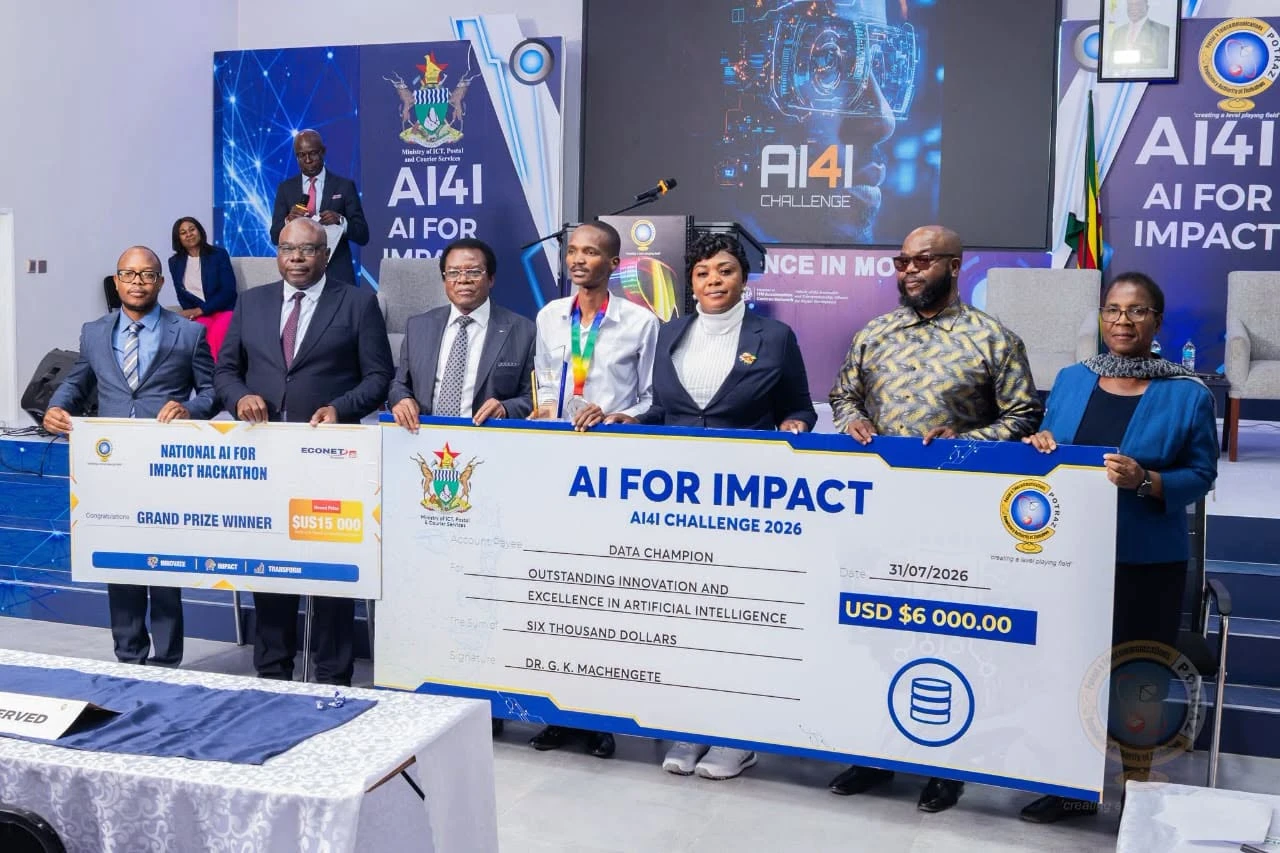
On 31 July, at the ceremony that closed the AI4I boot camp in Nyanga, Inzwi was named Data Champion: first place on the Data track of the POTRAZ AI for Impact Challenge 2026. The cheque reads "for outstanding innovation and excellence in artificial intelligence", and the prize is USD 6,000. Ten teams were on the Data track, out of thirty across the challenge.
It's been a few days, and I wanted to write it down properly rather than just post the photo.
How the week ended
The boot camp ran the way I described in my notes from the first few days: sessions first, then two full days of pitches, because thirty teams take a while to hear, and then the awards on the last day.
Two days of pitches is a lot of listening, and it was worth it. Across the four tracks, the same country's problems kept coming up from different directions. Data teams were talking about what gets collected and who owns it. Development teams were building on top of whatever data they could find. Deployment teams were asking what happens once it's in people's hands. It's rare to see all of that in one room, and it made the case for Inzwi's track better than I could have on my own.
What we pitched
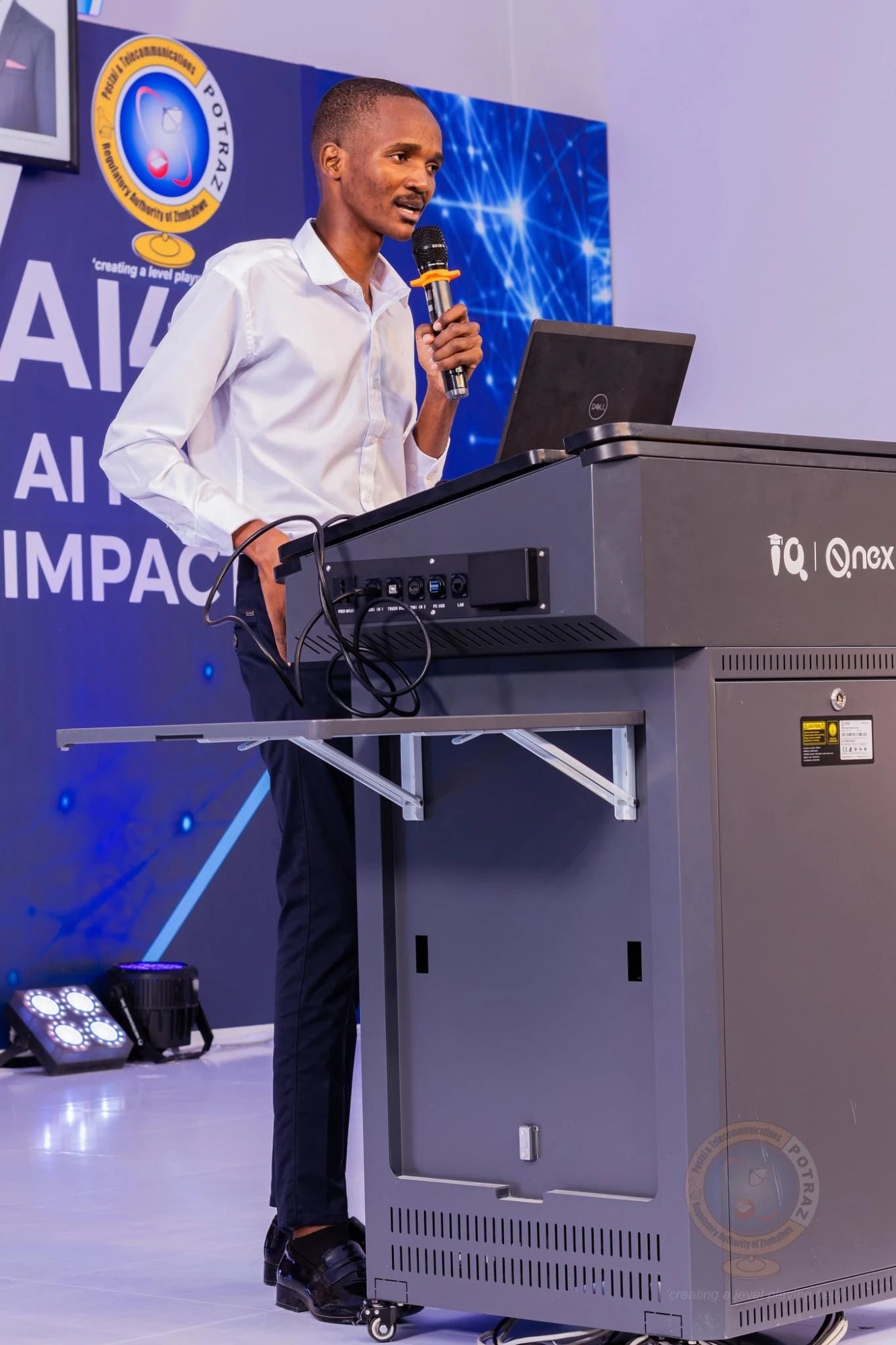
The Data track asks for the ethical collection, curation and governance of sovereign data. That's the reason Inzwi exists, so the pitch made one argument: you can't build speech AI for Zimbabwean languages until the data exists, and how that data gets gathered is the product.
It started with the gap. Shona and Ndebele are first languages for around sixteen million people, and they're almost absent from modern speech technology, because there's no training data to learn from. The open datasets that do exist leave out most of the varieties people actually speak.
Then it covered what Inzwi does about that. It's building a Shona and Ndebele speech corpus, tagged by dialect: Zezuru, Karanga, Manyika, Korekore and Ndau tracked separately, and Ndebele as its own language. Recognition is built for how people really talk, which in Zimbabwe means switching to English mid-sentence. Contributors are paid, and their consent is explicit and can be withdrawn. The data is recorded and governed in Zimbabwe, under the Cyber and Data Protection Act, and it doesn't leave.
The last part was the one I cared most about getting across. Those decisions aren't a compliance section at the end of the deck. They're what make the dataset worth trusting, and on this track, they're the whole point.
Why this track
I'm glad it was the Data track in particular. It rewards the unglamorous part: the consent forms, the dialect tags, the validation, the governance, the slow work of getting people to record a sentence and then another one. That's where most of Inzwi's effort goes, and it's the part a demo never shows.
It's also the part that lasts. Models get retrained and replaced. A well-governed corpus in a language that didn't have one keeps being useful for every model that comes after.
What the prize is for
The prize is going into building Inzwi itself.
We've trained speech recognition (ASR) and speech synthesis (TTS) models in-house on that corpus. The models are the engine, but on their own they're not something people use. The work now is the project around them: the product people actually touch, and the complementary systems that sit alongside the models and make them useful day to day.
That means the pieces that turn "a model that can transcribe Shona" into something that fits into someone's day. Recognition that identifies the dialect and copes with English in the middle of a sentence. Synthesis with voices that sound like people from here. Understanding that works in the language itself, rather than translating everything through English first. And reaching people where they already are, on WhatsApp and the web, rather than asking them to learn something new.
The corpus keeps growing underneath all of it. Shona collection is open now, and Ndebele collection is starting soon, with every contribution consented, paid for and governed here.
Thank you
To POTRAZ and the Ministry of ICT, Postal and Courier Services for running AI4I, and for making the Data track its own thing. To Fine Touch for the boot camp. To the mentors and the judges, and to the other teams, who made it a week worth being at.
And to everyone who has recorded their voice for Inzwi. This is built out of your recordings, and the award is as much yours as mine.
If you speak Shona, you can add your voice at collect.inzwi.app. Ndebele collection is starting soon. You can follow the rest at inzwi.app.
Thanks for reading
Read next
Notes from Nyanga: the AI4I boot camp